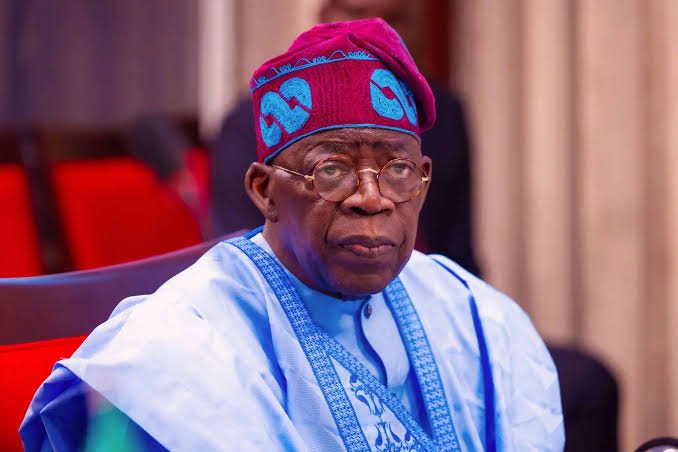
On Wednesday, President Bola Tinubu assented to the Electoral Act 2026 (Amendment) Bill, praising the National Assembly for taking what he called a significant step toward deepening and strengthening Nigeria’s democracy.
The signing ceremony took place at the Presidential Villa, Abuja.
Among top government officials present were the Senate President, Godswill Akpabio; Speaker of the House of Representatives, Tajudeen Abbas; and the Chief of Staff to the President, Femi Gbajabiamila.
Also in attendance were the Senate Leader, Opeyemi Bamidele; the Deputy Speaker of the House of Representatives, Benjamin Kalu, and other lawmakers.
Speaking shortly after assenting to the bill, Tinubu praised the legislature for its work on the amendment.
He said the essence of democracy was to have “very solid discussions committed to national development and nation-building,” noting that such engagements were essential for the stability of the country.
The amendment to the Electoral Act is expected to address key issues in the nation’s electoral process ahead of the 2027 general elections.
The President expressed optimism that the new law would further strengthen democratic institutions and promote credible elections across the country.
Tinubu said, “I followed keenly what you were doing; the essence of Democracy is to have very solid brainstorming discussions committed to national development and nation-building, stability of the nation. It’s not as important as the historical aspects of this. What is crucial is the fact that you managed the process to the extent that there will be no confusion, no disenfranchisement of Nigerians, and that we are all going to see Democracy flourish.
“It’s time to have confidence in our system; no matter how good a system is, it’s managed by the people, promoted by the people, and the result is finalised by the people. In fact, for final results, you are not going to be talking to the computer; you are going to be talking to human beings who will announce the final results.
“And when you look at the crux of various arguments, maybe Nigerians should question our broadband capability. How technically are we today? How technically will we be tomorrow to answer the call of either real-time or not?
“And as long as you appear personally, as a manual voter in any polling booth, a ballot paper is given to you manually, you decide in a corner and thumbprint the person of your choice, you cast your votes, without hindrance and any interference, ballots are subsequently counted manually, sorted, and counted manually.
“It’s just the arithmetic accuracy that is to enter into Form EC8A. It’s the manual, essentially. The transmission of that manual result is what we’re looking at. And we need to avoid glitches — I’m glad you did — interference, unnecessary hacking in this age of computer inquisitiveness.
“Nigeria will be there. We will flourish. We will continue to nurture this democracy for the fulfilment of our dream for the prosperity and stability of our country.”
Under the approved amendment, where electronic transmission is disrupted by network or communication challenges, the manually completed EC8A form will constitute the primary basis for collation and declaration of results.
The clause 60(3) of the bill passed by the National Assembly states, “The Presiding Officer shall electronically transmit the results from each polling unit to IREV portal, and such transmission shall be done after the prescribed Form EC8A has been signed and stamped by the Presiding officer and/or countersigned by the candidates or Polling agents where available at the Polling Unit.
“Provided that if the electronic transmission of the result fails as a result of communication failure and it becomes impossible to transmit the result contained in form EC8A signed and stamped by the Presiding Officer and countersigned by the candidates or polling agents where available at the polling unit, the form EC8A shall remain the primary source of collation and declaration of the result.”