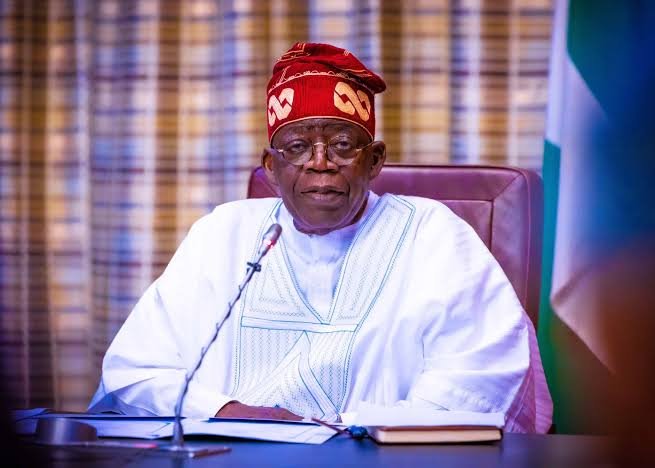
Nigeria’s general elections are less than four months away and different presidential candidates, including the incumbent, Bola Tinubu, have applied for the country’s number one job.
This is normal because Nigeria operates a multi – party democracy.
Campaigns have begun and issues are being raised and discussed, especially those bordering on the economy. Nigerians who have always clamoured for issue – based campaigns are particularly happy with the way things are going because matters that concern the people, such as security and the economy are being thrown up.
As expected, the economy is a major factor in the forthcoming elections because of the social effects of the bold and tough economic reforms carried out by President Bola Tinubu, especially the removal of petrol subsidy and the merger of the exchange rates.
There is no doubting the fact the social and economic ramifications of the reforms are still being felt by Nigerians. But it is encouraging to note that the positive gains of the reforms are beginning to manifest.
The macro economic indicators are in the upward swing and have been recognised by the international financial institutions, including the World Bank and the International Monetary Fund ( IMF)
This has in turn led to an unprededented rise in the Foreign Direct Investment ( FDI) into Nigeria. Nigeria’s Foreign Direct Investment (FDI) rebounded strongly to reach $4.01 billion in 2025, marking a 148% increase from $1.61 billion in 2024.
The inflation rate which rose to 34.80 % in December, 2024 declined to 15.43% in August 2026.
Nigeria’s real Gross Domestic Product (GDP) was 2.31% in May 2023. It grew by 4.43% year-on-year in the second quarter of 2026
The Nigerian Exchange Limited (NGX) was N28.845 trillion in May, 2023. However, the NGX finished in September 2026 with the All-Share Index at 251,211.67 points and a total market capitalization of ₦163.10 trillion.. This represents a 135% increase.
Nigeria’s foreign exchange stood at $35. 09 billion in May, 2023 , but in September, 2026, it rose sharply to $54.91 billion.
These positive macro economic indicators may not make sense to the ordinary Nigerians who still confronted the high cost living. However, they represent a positive sign that the reforms are working.
The next phase now is to ensure that these gains are reflected in micro economic level which impact the lives of the people directly.
The best person to do that is President Bola Tinubu who initiated the reforms
The President in his 66th Independence Anniversary address said the focus of his administration is shifting from correcting Nigeria’s economic course to achieving “shared and widespread prosperity.”
According to him, the emergency treatment the economy was subjected to is over and that the foundation has been repaired. The next phase is to build on the foundation
The next focus would be reducing the cost of producing and transporting goods as part of efforts to bring down the cost of living.
Nigerian businesses must produce goods for local consumption and export.. The nation has to consume what it produces in order to grow the naira.
The President deserves re- election on January 16, 2027 to complete the legacy projects he has started such as the Lagos – Calabar Coastal Highway and the Sokoto – Badagry Superhighway.
ABOUT THE AUTHOR:
Osikhekha is a public affairs analyst based in Lagos