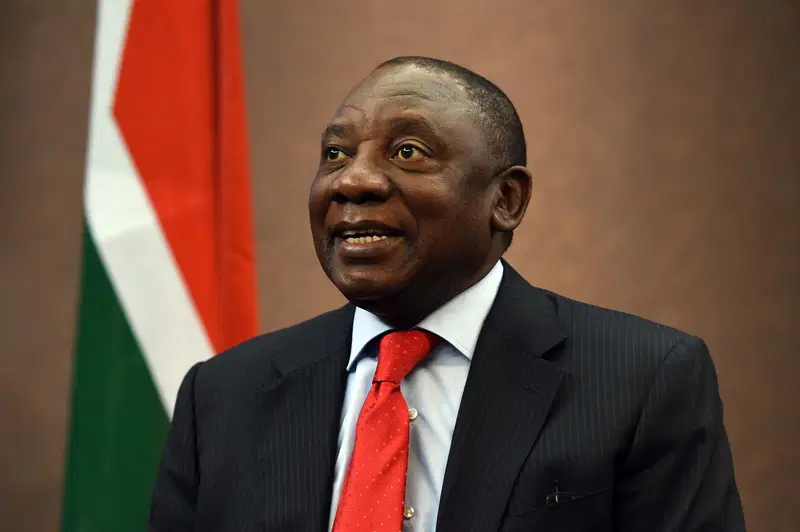
President Cyril Ramaphosa has rejected claims that South Africa is xenophobic, describing such characterisations as “lazy” amid ongoing protests over undocumented foreign nationals.
His spokesperson, Vincent Magwenya, made the remarks on Wednesday in Cape Town as anti-migrant rhetoric and demonstrations continue to gain traction.
Recent protests—some involving groups like Operation Dudula and political parties—have focused on undocumented migration, with calls for tighter controls, stricter visa rules, and action against businesses employing illegal migrants. Some demonstrations have previously turned violent.
Magwenya said Ramaphosa discussed immigration with Mozambique’s President Daniel Chapo during a meeting at Genadendal.
“The matter was discussed yesterday between President Chapo and President Ramaphosa, and they both agreed that, number one, South Africa is not xenophobic. South Africans are not xenophobic,” as quoted by South African news agency, IOL.
“Once you have pockets of protest, which is permissible within our constitutional framework, you also have the reality that the issue of immigration is a pressure point, not only here in South Africa, but throughout the world where protests are held on these issues,” Magwenya said.
He stressed the need to respect rights and keep protests peaceful.
“In this regard, the President expects law enforcement to also play its role to prevent any acts of violence against any individual.
“Yesterday, both President Chapo and President Ramaphosa also agreed that the continent needs to work together to address the issues that are behind these levels of migration that we see across our continent.”
Magwenya cited conflict, instability and misgovernance as key drivers of migration.
“The condemnations that we’ve had coming from the different quarters on the continent should not just end in condemnations, but there should also be willingness to constructively engage on what are these issues and factors behind people seeking to leave their countries of birth and seeking refuge elsewhere.”
“But the President did emphasise that South Africa is a welcoming country. South Africans are open, friendly, and warm people. And we will reject any notion that seeks to characterize this country or its people as being xenophobic.”
Magwenya added that criticism from other African countries had been dismissed.
“In fact, any characterization of this protest that seeks to portray South Africans as xenophobic is actually a lazy sort of analysis of the real issues that I play here.
“There are genuine concerns that communities have with respect to crime.”
He said crimes involving foreign nationals should be handled by law enforcement without bias.
“Crimes that are committed by foreign nationals, where the President expects law enforcement, again, to act without any fear or favor, and also to say to those who are visitors in our country, they must respect and conform with our laws. If they break the law, they will face the full might of the law, like all of us are expected to respect the law.”
The remarks follow concerns raised by countries including Nigeria and Ghana over the safety of their citizens, with Nigeria warning its nationals to exercise caution and offering voluntary repatriation to more than 100 people.
Meanwhile, the Police Ministry has warned it will act against violence targeting foreign nationals.
“The Ministry of Police has on numerous occasions condemned acts of violence and intimidation directed at foreign nationals within the Republic of South Africa as these actions are unlawful and are in direct opposition to the values of dignity, equality, and human rights upon which our democracy is founded,” said spokesperson Kamogelo Mogotsi.
“The Ministry has advised that the South African Police Service will act decisively and without hesitation in addressing incidents of violence against foreign nationals.
“The Ministry of Police has called on all community leaders, civil society organisations, and all stakeholders to work together with law enforcement agencies to prevent further violence and to promote dialogue and understanding,” she said.