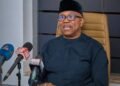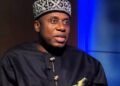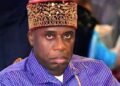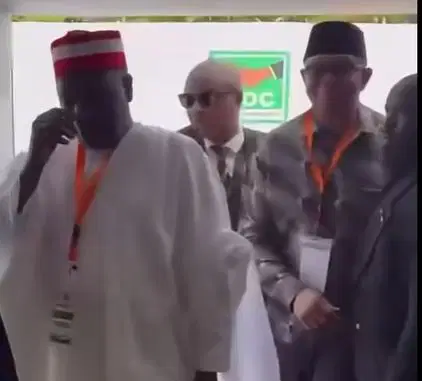
Nigeria’s opposition push towards 2027 has suffered a major setback after Peter Obi and Rabiu Musa Kwankwaso walked away from the African Democratic Congress, ADC, deepening cracks in what had been one of the most closely watched coalition efforts in recent years.
Their exit, alongside allies including Victor Umeh, Kabir Marafa, Aishatu Dahiru Binani, Kabir Gaya, Ehiozuwa Johnson Agbonayinma, Victor Ogene and former IPAC chairman Peter Ameh, is the clearest sign yet that the alliance forged in 2025 is coming under sustained strain.
The coalition had brought together leading opposition figures across regions, raising early hopes of a united front. That prospect is now in doubt.
Both camps (Obi & Kwankwaso) have moved towards the Nigeria Democratic Congress, NDC, a platform led by former Bayelsa State governor Seriake Dickson, signalling a fresh round of political realignments.
What has unfolded reflects disagreements that never fully settled; over how power should be shared, how candidates should emerge, and whether the party could be trusted to manage competing ambitions fairly.
What followed was a test of the party’s political elasticity; its ability to stretch across competing ambitions, regional expectations and legal pressures without breaking.
Where It Began to Fray
One of the sharpest disagreements centred on zoning the presidential ticket. Obi’s camp wanted a clear commitment that the ticket would go to the South, arguing it was both politically strategic and necessary for national balance.
The party leadership, however, avoided a firm position, insisting the focus should remain on selecting the most electable candidate. That ambiguity created unease.
Within Obi’s camp, it was read as a signal that the process could tilt in favour of a Northern candidate, particularly given the influence of figures aligned with former Vice President Atiku Abubakar. Trust began to erode from that point.
There was also disagreement over how the candidate should be chosen. While the party leaned towards direct primaries, some within the coalition believed that approach would favour entrenched political structures, making the outcome predictable long before any vote.
Courtroom Battles, Real-World Consequences
The internal disputes were compounded by a string of court cases over the party’s leadership. A long-running tussle involving factions linked to David Mark and rival groups reached the Supreme Court, which has now returned the matter to the Federal High Court for full hearing. While that provided temporary procedural clarity, it left the core dispute unresolved.
The implications go beyond the courtroom. With the Independent National Electoral Commission (INEC) enforcing deadlines for submission of membership registers, a key requirement for participating in the 2027 elections, uncertainty over who holds legitimate authority has raised concerns about compliance.
A separate case seeking the deregistration of the ADC and other parties adds another layer of pressure. Party officials dismiss it, but taken together with the leadership disputes, it has reinforced perceptions of instability.
Nigeria’s opposition push towards 2027 has suffered a major setback after Peter Obi and Rabiu Musa Kwankwaso walked away from the African Democratic Congress, ADC, deepening cracks in what had been one of the most closely watched coalition efforts in recent years.
Their exit, alongside allies including Victor Umeh, Kabir Marafa, Aishatu Dahiru Binani, Kabir Gaya, Ehiozuwa Johnson Agbonayinma, Victor Ogene and former IPAC chairman Peter Ameh, is the clearest sign yet that the alliance forged in 2025 is coming under sustained strain.
The coalition had brought together leading opposition figures across regions, raising early hopes of a united front. That prospect is now in doubt.
Both camps (Obi & Kwankwaso) have moved towards the Nigeria Democratic Congress, NDC, a platform led by former Bayelsa State governor Seriake Dickson, signalling a fresh round of political realignments.
What has unfolded reflects disagreements that never fully settled; over how power should be shared, how candidates should emerge, and whether the party could be trusted to manage competing ambitions fairly.
What followed was a test of the party’s political elasticity; its ability to stretch across competing ambitions, regional expectations and legal pressures without breaking.
Where It Began to Fray
One of the sharpest disagreements centred on zoning the presidential ticket. Obi’s camp wanted a clear commitment that the ticket would go to the South, arguing it was both politically strategic and necessary for national balance.
The party leadership, however, avoided a firm position, insisting the focus should remain on selecting the most electable candidate. That ambiguity created unease.
Within Obi’s camp, it was read as a signal that the process could tilt in favour of a Northern candidate, particularly given the influence of figures aligned with former Vice President Atiku Abubakar. Trust began to erode from that point.
There was also disagreement over how the candidate should be chosen. While the party leaned towards direct primaries, some within the coalition believed that approach would favour entrenched political structures, making the outcome predictable long before any vote.
Courtroom Battles, Real-World Consequences
The internal disputes were compounded by a string of court cases over the party’s leadership. A long-running tussle involving factions linked to David Mark and rival groups reached the Supreme Court, which has now returned the matter to the Federal High Court for full hearing. While that provided temporary procedural clarity, it left the core dispute unresolved.
The implications go beyond the courtroom. With the Independent National Electoral Commission (INEC) enforcing deadlines for submission of membership registers, a key requirement for participating in the 2027 elections, uncertainty over who holds legitimate authority has raised concerns about compliance.
A separate case seeking the deregistration of the ADC and other parties adds another layer of pressure. Party officials dismiss it, but taken together with the leadership disputes, it has reinforced perceptions of instability.
Umeh: ‘We Started With Hope’
Speaking on Arise TV, Victor Umeh confirmed he had left the party and explained the decision, linking it to deeper political and structural concerns within the coalition.
“I have resigned from the ADC since the 1st of May. I am moving to the NDC,” he said.
He described a coalition that began with promise but gradually lost cohesion amid internal disputes and legal uncertainty.
“When the coalition came together on the 2nd of July last year, it came with a lot of hope. People came together and Nigerians celebrated that people who can actually stand firm have come together. We started from that moment till the end of the year; time started ticking and along the line legal twists were introduced in the matter,” he said.
Umeh suggested that the instability created by prolonged litigation and internal disagreements made it difficult for key actors, including supporters of Peter Obi and Rabiu Musa Kwankwaso, to sustain confidence in the platform.
He also pointed to actions within the party that he believes deliberately weakened its structure.
“Somebody who resigned as a member of the NWC of ADC went to court to challenge something the party had done to his full knowledge, he made himself a willing tool to be used to destabilise the party and he went to the court; the intention might not have been to become anything significant simply to muddy the water,” he said.
Umeh further defended the timing of the exit, noting that the coalition had not been encumbered by major legal disputes at inception, and argued that expectations of permanence in party alignments do not reflect the realities of Nigeria’s political system, where shifting platforms often follow unresolved structural tensions.
ADC Responds: ‘Not a Mortal Blow’
However, the party insists it remains intact. Its National Publicity Secretary, Bolaji Abdullahi, acknowledged the weight of the departures by Obi and Kwankwaso, alongside their large following, but argued they are not decisive.
“I will be lying to say it didn’t mean anything. No, these are two significant politicians, frontline politicians in this country. When you lose those two politicians, then you will feel t
hat you’ve lost something. But it’s not a mortal blow,” he said.
A Coalition Reduced
Without Obi and Kwankwaso, the coalition’s national spread is diminished.
Obi brought strong backing from urban voters and much of the South. Kwankwaso commanded a loyal base in the North. Together, they gave the alliance breadth and balance.
Their exit leaves a slimmer formation, forcing those who remain to rethink both message and strategy.
A New Platform, Familiar Tests
The NDC is emerging as an alternative home for defectors. With Seriake Dickson at the centre, it is projecting stability and a fresh start. But the hurdles are familiar; building nationwide structures, meeting regulatory requirements, and managing competing ambitions within a single platform.
2027: A Fragmented Field
The developments highlight a persistent challenge in Nigeria’s opposition politics, sustaining unity long enough to present a credible alternative.
Coalitions often form around shared urgency, but struggle to hold under the weight of competing ambitions and unresolved rules.
For the ADC, that elasticity has now been stretched to its limits. With the opposition increasingly fragmented, the road to 2027 becomes more uncertain. The ADC may remain on the ballot, but its role has shifted, from a central rallying point to one of several platforms in a divided political field.