The Independent National Electoral Commission (INEC) has adopted the recently concluded Osun State governorship election as a benchmark for its preparations for the 2027 general election.
INEC Chairman, Prof. Joash Amupitan, said the commission would build on improvements recorded during the August 15 election, particularly in the opening of polling units, the performance of the Bimodal Voter Accreditation System (BVAS), electronic transmission of results and management of electoral crises.
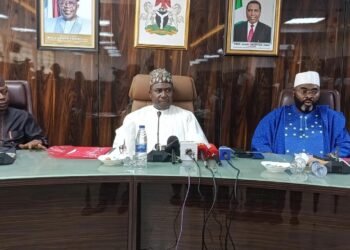
Amupitan spoke on Friday when the Chargé d’Affaires of Canada to Nigeria, David Sproule, led a delegation from the Canadian High Commission on a visit to INEC headquarters in Abuja.
The chairman said the commission had been using recent off-cycle elections to test new procedures and improve its operations ahead of the 2027 elections.
He listed the Anambra governorship election, Federal Capital Territory Area Council elections and Ekiti governorship election among the polls that had provided useful lessons.
According to him, the Osun election stood out because of the improvements recorded across several aspects of the electoral process.
Amupitan said 3,556 out of 3,763 polling units, representing 94.5 per cent, were opened for accreditation and voting by 8:30am.
He also cited the performance of BVAS, electronic result uploads through the IReV portal and the commission’s handling of emerging challenges during the election.
“We view the success in Osun not as a final destination, but as the gold standard that will guide our preparations for 2027,” he said.
Amupitan disclosed that INEC had commenced preparations for the 2027 general election, noting that the official period for public campaigns and rallies began on August 19.
He identified five priority areas for the commission as it prepares for the polls: consolidating technological improvements, expanding electoral inclusion, strengthening institutional capacity, tackling misinformation and protecting electoral integrity.
He also announced plans for a nationwide mock accreditation exercise in November 2026, which he said would allow INEC to test BVAS and other electoral equipment under field conditions before the general election.
The commission, according to Amupitan, expects to require about 1.4 million ad-hoc personnel to conduct the 2027 elections across more than 176,000 polling units.
He described the planned mobilisation as one of the largest deployments of personnel for a single national operation in Nigeria.
Amupitan further disclosed that INEC had created an artificial intelligence unit to examine how the technology could be responsibly deployed in areas such as voter registration, data management and results transmission.
He said the commission would also develop measures to address emerging threats, including deepfakes and disinformation.
The chairman said INEC would attend a global conference on responsible AI and elections in Ottawa, Canada, from September 9 to 11, and appealed to the Canadian High Commission to assist members of the delegation with expedited entry visas.
Sproule, meanwhile, reaffirmed Canada’s commitment to supporting Nigeria’s democratic and electoral development ahead of the 2027 elections.
He said Canada would continue to provide assistance in areas including electoral participation, women’s inclusion, public awareness, technical support and election observation.