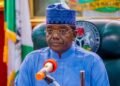
The Group Chief Executive Officer of the Nigerian National Petroleum Company Limited, NNPCL, Bayo Ojulari, did not award or participate in the award of any oil block or marginal field, industry insiders have said.
The Group Chief Executive Officer of the Nigerian National Petroleum Company Limited, NNPCL, Bayo Ojulari, did not award or participate in the award of any oil block or marginal field, industry insiders have said.
The insiders also said Ojulari and NNPCL do not have the statutory authority to allocate oil blocks or issue petroleum licences in Nigeria.
Their comments followed allegations linking Ojulari to the award of an oil field to a company allegedly connected to his wife.
According to the sources, the allegations are unsupported by evidence and inconsistent with the legal framework governing petroleum licensing in Nigeria.
Under the Petroleum Industry Act, PIA, upstream petroleum licensing is administered by the Nigerian Upstream Petroleum Regulatory Commission, NUPRC, while the authority to grant a Petroleum Prospecting Licence rests with the Minister of Petroleum Resources.
The sources therefore said Ojulari neither conducted the relevant bid process nor evaluated applicants, selected beneficiaries or approved the award of any oil block.
“This allegation collapses under the slightest scrutiny,” a senior industry official said.
“Ojulari did not conduct the bid process, evaluate applicants, select winners or award any oil block. He had absolutely no statutory role in the exercise. Those spreading this narrative know this, but they are deliberately misleading the public.”
The insiders further alleged that interests opposed to reforms being implemented under the current NNPCL leadership were behind what they described as a coordinated campaign against Ojulari.
According to the sources, some individuals and companies whose commercial interests have been affected by measures introduced by the NNPCL leadership are supporting a group operating under the name Oil and Gas Professionals Forum, OGPF.
The group recently alleged that a company linked to Ojulari’s wife benefited from the award of a marginal oil field.
However, the sources said the group had not produced corporate documents, beneficial ownership records, licensing papers or other verifiable evidence establishing the alleged connection or showing that Ojulari influenced the award.
The industry insiders described the allegation as an attempt to damage Ojulari’s reputation, undermine confidence in his leadership and create grounds for calls for his removal from office.
“This is not an innocent misunderstanding of the licensing process,” one of the sources said.
“It is a deliberate attempt to hold Ojulari responsible for an exercise over which he had no legal authority, no regulatory responsibility and no decision-making power.”
The sources said the allegations had intensified as the NNPCL leadership pursued measures aimed at improving transparency in commercial transactions, enforcing financial discipline, reducing operating costs and reviewing arrangements considered wasteful or inconsistent with the company’s commercial objectives.
They alleged that some individuals and companies that previously benefited from opaque transactions and weak institutional controls were resisting the changes because their interests had been affected.
According to the sources, the strategy was to portray Ojulari as ethically compromised, weaken his authority and divert attention from the institutional changes being implemented at NNPCL.
However, the sources did not provide documentary evidence identifying the individuals or organisations allegedly sponsoring the campaign.
Since assuming office, Ojulari has pursued measures aimed at repositioning NNPCL as a commercially driven, operationally efficient and globally competitive energy company.
His administration has prioritised cost reduction, increased production, stronger corporate governance, financial accountability and greater transparency across the company’s commercial operations.
He has also pushed for greater discipline in contracting and investment decisions, while seeking to reduce waste, strengthen internal controls and ensure that commercial arrangements deliver measurable value to NNPCL and the Nigerian people.
Industry stakeholders said such measures could affect established commercial interests, particularly where previous arrangements benefited from weak oversight or inadequate institutional controls.
A senior NNPCL official, who spoke on condition of anonymity because he was not authorised to speak publicly, dismissed the allegations against Ojulari as baseless and politically motivated.
The official also said Ojulari had complied with relevant asset-declaration and Code of Conduct requirements.
“The attempt to link his family to an oil-block award is false and can easily be tested against official corporate and licensing records,” the official said.
“More importantly, the GCEO of NNPCL does not award oil blocks. NNPCL did not conduct the licensing exercise, and Ojulari neither selected nor approved any beneficiary. The allegation is therefore built on a false premise.”
The official challenged those making the allegations to produce verifiable evidence and submit it to the appropriate investigative authorities rather than circulate what he described as unsupported accusations through anonymous groups and social media platforms.
The NNPCL insiders maintained that the company would not be distracted by the allegations from implementing reforms aimed at strengthening transparency, improving operational efficiency and transforming the national oil company into a disciplined and commercially successful energy enterprise.