The UN Security Council began the process of selecting the UN’s next secretary-general, holding a first “straw poll” to gauge the seven candidates’ support for the high-profile global statesman role.
Four women and three men are so far in the running to succeed Antonio Guterres, who will complete his second five-year term on December 31, 2026.
They are Michelle Bachelet of Chile, Maria Fernanda Espinosa of Ecuador, Rafael Grossi of Argentina, Rebeca Grynspan of Costa Rica, Olara Otunnu of Uganda, Carolyn Rodrigues-Birkett of Guyana, and Macky Sall of Senegal.
Although Grossi, the head of the International Atomic Energy Agency, has arguably the best name recognition, observers believe that for now there is no clear favorite in the race that could last several months.
“It’s an important start to the process. It’s important (we) select the best candidate,” said Pakistan’s ambassador to the UN Asim Ahmad as he arrived for the gathering.
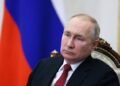
Diplomats are reluctant to predict the outcome of the race because of the sway of the five permanent members of the Security Council — the United States, Russia, China, France, and the United Kingdom — which have not yet indicated their preferences.
“Your guess is as interesting as mine,” said one senior diplomat at the UN.
Even if a candidate bags the required nine votes from the 15 available in the Security Council, they must also avoid a veto by the five major powers, which are deeply divided.
Once a candidate clears those bars, their name will go to the General Assembly of all UN members for confirmation.
On Thursday, the Council’s 15 members were meeting behind closed doors to test the waters with the first “straw poll,” devised in the early 1980s in an attempt to break a deadlock between two candidates shut down by vetoes.
The informal mechanism has persisted, in various forms, in spite of criticism from countries opposed to the opaque process.