A new political reality is emerging in Edo State, and it is one driven not merely by party structures or historical affiliations but by the impact of governance and the visible outcomes of leadership. The driver is Senator Monday Okpebholo, the Executive Governor of Edo State, who is being addressed as Akpakorescue with the motto, ‘A New Edo is Rising’.
His style is lending credence to the fact that there is no confusion in politics. This is because, like nature, it is constantly evolving. In every democratic society, political alliances are shaped, reshaped, and sometimes completely transformed by the forces of governance, public expectations, and the performance of leadership.
Even critics are united in their assessment that the administration of Governor Monday Okpebholo has, within a short period, introduced reforms and development initiatives that are gradually redefining political calculations in the state. Beyond the traditional lines of political contestation, there is a growing recognition that effective governance has the power to create new partnerships, attract new supporters, and reshape old assumptions.
Recent developments, particularly the decision by some former political appointees of the immediate past administration of Governor Godwin Obaseki to openly identify with Governor Okpebholo’s development agenda, provide a clear indication that Edo’s political landscape is experiencing a significant shift.
The endorsement by members of the Edo Women Ambassadors for Renewed Hope Agenda (EWARHA) is not just another political gathering. It reflects a broader conversation about governance, performance, and the direction of the state. The group comprises professionals and individuals with experience in public administration, including former appointees who served in strategic positions under the previous government.
Their decision to support the Okpebholo administration is significant because it demonstrates that political engagement is no longer restricted to party loyalty alone. Increasingly, citizens and stakeholders are assessing governments based on what they deliver, the impact of their policies, and their ability to address the challenges facing the people.
For decades, politics in Nigeria has often been defined by strong personal interest and party identities. However, the events unfolding in Edo suggest a gradual movement towards a politics of performance, where achievements and results become critical factors in determining political support.
Governor Okpebholo, in less than two years, has placed infrastructure renewal, road rehabilitation, economic development, and improved connectivity at the center of his SHINE agenda. Across Edo State, ongoing road projects and interventions in different communities have become visible indicators of his government’s commitment to improving the lives of Edo people.
He has repeatedly emphasised that governance must go beyond promises and speeches. He says it must translate into projects and policies that directly affect the people. This philosophy is reflected in his administration’s approach to road construction, rural development, and opening up communities that were previously difficult to access.
The significance of these efforts is better understood when viewed from the perspective of communities that have long demanded government attention and lost their voices. For residents in rural areas, a motorable road is not simply an infrastructure project; it is a pathway to markets, healthcare, education, and economic opportunities. It is a symbol of recognition and relevance.
This practical approach to governance is what is influencing political conversations across Edo state. When citizens see tangible improvements in their communities, political narratives begin to change. When they see promises and are translated and pledges being redeemed, they become more interested in leadership.
The support from former appointees and supporters of Mr. Obaseki also carries an important message. It suggests that governance achievements can transcend political boundaries. Individuals who once served in another administration can acknowledge progress when they see it, regardless of previous political differences.
This does not diminish the contributions of previous administrations. Rather, it reinforces a fundamental principle of democracy — that every government should be judged by its own record and its ability to improve on existing foundations.
For Governor Okpebholo, this emerging political realignment presents both an opportunity and a responsibility. The opportunity lies in the ability to build a broader coalition that includes professionals, community leaders, civil society groups, and citizens who are willing to support development beyond party lines.
The responsibility now is to sustain the momentum by committing to ensuring that the expectations created by these endorsements are matched with continuous delivery. Governor Okpebholo knows that political support built around performance requires consistent performance. He knows the game. Edo people who support a government because of its achievements will continue to demand more achievements.
The emergence of groups like EWARHA also highlights the increasing influence of professional women in Edo’s political space. Their decision to engage with governance demonstrates that political participation is expanding beyond traditional structures.
As women professionals, community leaders, and stakeholders, they are becoming important voices in determining the future direction of politics. Their involvement can and will strengthen democracy because it introduces broader perspectives into public discourse.
Beyond Edo State, the developments also reflect a wider trend in Nigerian politics. Across the country, voters are becoming more conscious of governance outcomes. While party identity remains important, citizens increasingly want to know what leaders are delivering and how policies affect their daily lives.
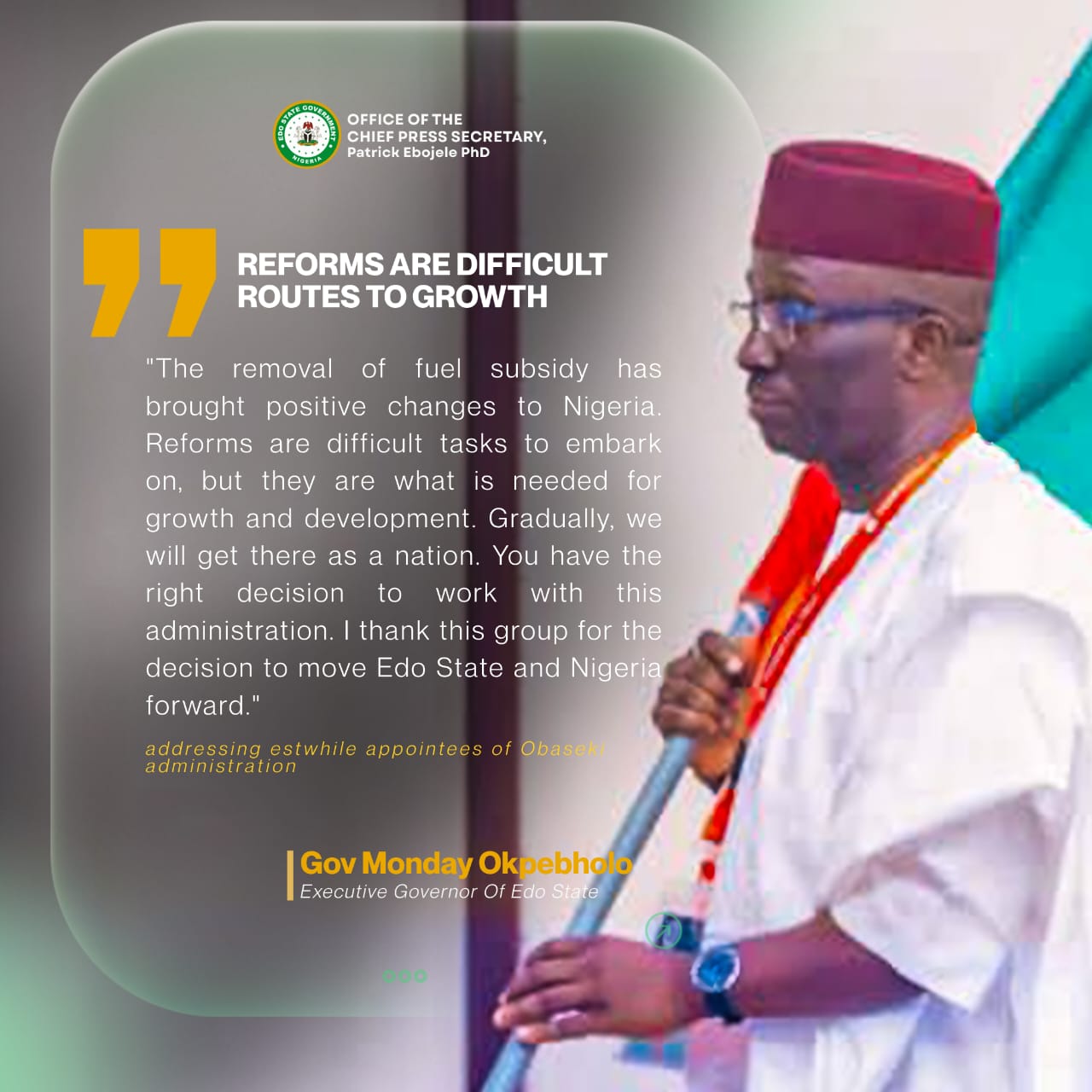
President Bola Ahmed Tinubu’s economic reforms, including the removal of fuel subsidy, have also shaped conversations about development financing and government capacity. Governor Okpebholo has consistently stated that increased resources available to states through the President’s effort provide opportunities for state and local governments to embark on more development projects.
According to the governor, reforms are often challenging but necessary for long-term growth. His administration believes that prudent utilisation of available resources will help Edo State achieve sustainable development.
The political implications of these developments are clear. A government that delivers visible projects and maintains strong engagement with citizens naturally expands its support base. Political realignment often begins when people who were previously undecided or aligned elsewhere begin to reassess their positions based on new realities.
Governor Okpebholo’s emerging political strength is therefore not built solely on alliances but on the belief that governance can create confidence. As more stakeholders evaluate the administration through the lens of performance, Edo’s political landscape may continue to experience significant transformation.
The message from recent developments is clear: in Edo State, the politics of tomorrow may increasingly belong to leaders who can demonstrate results today. Governor Okpebholo’s reforms and development agenda are beginning to shape a new political conversation — one where performance, inclusion, and practical governance become the foundation for political realignment.
ABOUT THE AUTHOR:
Ebojele, Ph.D in Public Administration, is the Chief Press Secretary to Governor Monday Okpebholo.