Many Nigerians believe that restructuring the country or devolving powers from the centre to the sub-nationals is the silver bullet that will solve all our problems. This belief has sustained the debate for or against restructuring for decades. As fanciful as this claim is, I disagree with this position because bad leadership is a more significant challenge than the superstructure of the country. Although the way Nigeria is structured does not make for optimal productivity and needs some form of amendment or tinkering, we need thinking and honest leadership to make progress. This kind of leadership is required at the central and sub-national levels.
One area in which sub-nationals or states of the federation would take advantage of to show that a restructured Nigeria can be an oasis of development is electricity generation, transmission, and distribution. This is because of the multiplier effect of electricity on quality of life, productivity, employment generation, and human development. The recent epidemic of blackouts that has enveloped the nation due to the collapse of the national grid and frequent power outages have challenged the proposition that if power is devolved to the sub-nationals or states, most, if not all, of our problems would be solved. It has also brought to the fore the need for state governments to step up their game. A quick review of how a change in the 1999 constitutional provision and a new electricity act has necessitated a change in the role of state governments in electric power sufficiency is essential for clarity.
Electricity has always been on the concurrent legislative list. It was so under the 1963 and 1979 constitutions. However, the 1999 provisions on the concurrent federal and state legislative powers over electricity were drafted in a way that made it impossible for states to make laws to establish their electricity markets and play a pivotal role in addressing power shortages that have literarily crippled our economic growth. Eventually, in 2023, the National and State assemblies came together to amend the 1999 constitution and remove the constraints that challenged enacting state laws on electricity. This was followed up by enacting a new Electricity Act, 2023, which allowed states to regulate electricity generation, transmission, and distribution businesses within their territories. The act created two electricity markets, the national and state markets. The National Electricity Regulatory Commission (NERC) from Abuja will regulate the national electricity market, while the states are expected to implement electricity market policies, legal frameworks, and institutions to regulate their respective state electricity markets.
One takeaway from the current state of the anaemic electricity supply nationwide is that states cannot continue to wait for the federal government alone to resolve the challenge. The states now have the full constitutional authority to create the frameworks for the adequate electricity supply to their citizens. They now have the power to create the right environment to attract investment into this new electricity market and ultimately raise the national power-generating capacity from the embarrassing levels at which it is currently. The current situation where the country generates less than 4,000 MW of electricity for 220 million people, but the same people own and operate over 50,000 MW of self-generation or generator capacity, makes us appear unserious. Despite this 50,000mw self-generation, we still have epileptic power nationally, producing sub-optimally and far less than our potential. The epidemic of blackouts that has enveloped the nation in the past few weeks has challenged the proposition that if power is devolved to the sub-nationals or states, most, if not all, our problems would be solved.
I will share my thoughts on why most state governments are not taking advantage of the new Electricity Act and should double their effort to get us out of this perennial descent into a permanent state of darkness. This is against the background of the abundance of gas in south-south and southeast states, massive potential for hydro in Southwest states and solar generation in the northern states. The significant reasons states fail to tackle the electricity problem and unleash economic growth in their states are fourfold: first, a lack of understanding of the need for and political will to fix the power problem from a state perspective. State governors prefer short-term infrastructure projects that give them political mileage and are transactional. The myth that electricity is the centre’s problem has shaped state leaders’ thinking for too long. The second is the lack of qualified and competent human resources to drive policy and serve as regulators. Even the national regulator, NERC, had this problem in 2006 when they started, which is still so today. The third is the problem of implementation and enforcement of policies, laws, and agreements in the long term. Most investors have had to contend with violations of the sanctity of contracts and policy inconsistencies at the state and federal levels. The fourth reason is that states need more investment in technology and network infrastructure for electrification projects and for the ecosystem to become attractive to potential investors.
Despite these challenges, there is some silver linings in this dark cloud. Recently, I had a long engagement with the governor of Enugu state around power. Enugu state has taken the bull by the horns and has not only enacted its state policy and law but has already set up its regulatory body comprising experienced hands who have experience working in NERC, discos, or industry consulting firms. The Enugu Electricity Regulatory Commission is now on the verge of issuing its first licenses to private investors. There is no doubt that Enugu is on the path to energy self-sufficiency, which will, in turn, unleash her economic growth potential. States like Lagos, Oyo and Ogun, Kaduna, Kano, Anambra, Abia, Rivers, Taraba, and Plateau, where there is a significant advantage in terms of availability of commercial/industrial markets and availability of fuel sources such as natural gas, hydro and solar have no reason to be slow about following in Enugu state’s footsteps.
The inference from the preceding is that both political devolution and electricity devolution require political will and an enabling economic environment. An economically unviable state will remain a nightmare as it cannot demand or pay for electricity. Industrial and commercial markets for power are a prerequisite for investment in the power sector. Investors will only come if the electricity market exists. In this regard, only 30% of our states can attract investors to the power sector. Nigeria has long struggled with electricity supply issues, leading to frequent blackouts nationwide. Several factors contribute to the current blackouts and power outages, the most reoccurring narratives being grid disruptions, failing distribution infrastructure and, topmost, short supply of gas due to debt and other commercial reasons.
Therefore, the federal government still has a crucial role in the power sector to drive social and economic development on a national scale. It must create the right ecosystem to spur investment in electricity infrastructure, including building new power plants, upgrading existing ones, and expanding the transmission and distribution networks. This requires both public and private sector involvement, as well as partnerships with international organizations and investors. It must champion the diversification of energy sources, especially renewable energy, such as solar, wind, and hydroelectric power, which provide a more sustainable and reliable electricity supply.
The current state of the anaemic electricity supply in Nigeria, as experienced in the blackouts of the past few weeks, calls for a new approach. Nigeria’s blackout problem is not just a technical issue but a combination of human capacity challenges and systemic inefficiencies requiring urgent and comprehensive solutions. The flickering lights of Nigeria are a stark reminder of the urgent need for visionary leadership at the federal and state levels in the energy sector. We must never forget that blackouts are not just inconvenient interruptions; they’re crippling barriers to progress and development.
The current national blackout should be a wake-up call for states of the federation to wake up from their complacency and speed up the process of playing a pivotal role in energy sufficiency. State governments must avail themselves of the incredible opportunity the new Electricity Act provided them and at least provide the building blocks to electricity sufficiency and efficiency in the states.
ABOUT THE AUTHOR
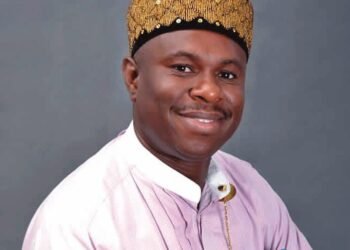
Dakuku Peterside, a former DG at NIMASA, writes from Rivers State, Nigeria