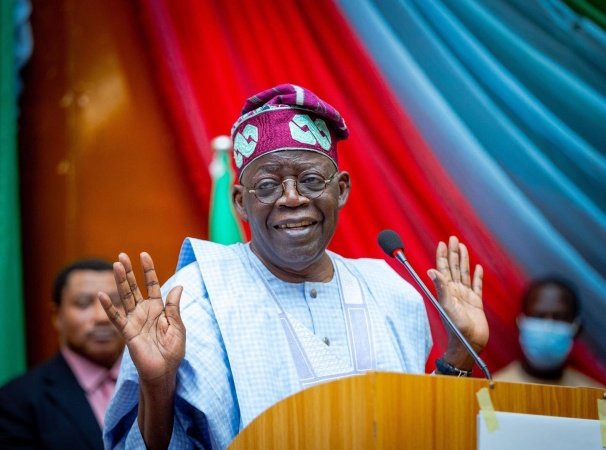
The federal government is set to introduce tuition fees in federal universities, polytechnics and other tertiary institutions following the signing of the Student Loan Bill by President Bola Ahmed Tinubu.
The bill, which is now an act of parliament was signed on Monday, a development widely celebrated in many quarters without understanding the implication of the new law for the millions of prospective students who rely on tuition-free higher institutions of learning to acquire knowledge.
Educationists and other stakeholders said this would have wider implications.
In Nigeria, tuition, which runs into hundreds of thousands of naira or even millions of naira in private universities, is free in government schools at both national and state levels.
The situation has been the same since independence, even though some charges for other issues such as accommodation, departmental, and course registration, among others vary from one institution to another.
The waiver of tuition has given millions of students the opportunity to go to school, but observers say the introduction of a student loan scheme by the federal government means an end to tuition-free education.
There was no immediate response from the Federal Ministry of Education
What the law says
Clause 3 of the Students Loan Act says: “The loans referred to in this Act shall be granted to students only for the payment of tuition fees.”
This clause contravenes the existing provision that says tuition is free in public institutions.
Meanwhile, the question of tuition in Nigerian institutions is a constitutional matter vide Chapter 2 of the amended 1999 Constitution. By the provisions of that chapter, no publicly owned institution is permitted and it is illegal for any one of them to charge tuition fees on any citizen of the country.
According to the Act establishing the law, the Student Loan Bill would provide easy access to higher education for indigent Nigerians through interest-free loans from the Nigerian Education Loan Fund.
As enacted by the National, the Act shall apply to all matters pertaining to the application and grant of loans to Nigerians seeking higher education into institutions of higher learning in Nigeria through the Nigerian Education Loan Fund.
“All students seeking higher education in any public institution of higher learning in Nigeria shall have equal right to access the loans under this Act without any discrimination arising from gender, religion, tribe, position or disability of any kind,” the act reads.
It, however, noted that the grant of the loan to any student under the Act shall be subject to the applicant satisfying the requirements and conditions set out under this Act.
Many students will leave school – ASUU
When our reporter contacted the President of the Academic Staff Union of Universities (ASUU), Prof. Emmanuel Osodeke, he said the bill is not new as it has been on for a long time.
He said: “A country where more than 133 million are living below the poverty line and you want to introduce tuition fees? It will be counterproductive.
“Every Nigerian should know what is going to happen next and there may likely be another bill waiting for signature that will introduce tuition fees. If the bill indicated that the loan is to pay tuition fees and there are no tuition fees in Nigerian universities, then what is your next approach,” he asked.
He, however, noted that the union is yet to have access to the accurate copy and that they needed to get it and study it.
“We have said long ago, in 2017, to President Buhari when they came up with the issue of tuition fees, that every student will pay N1 million and we said you cannot put that in our agreement and you cannot use that to negotiate with us and with the nature of the country we have today, there is no way that will work.
“What will happen is that the majority of students whose parents cannot afford it will pull out of school in anger and you know what that means, they will fight the society back. But let us get the correct information first before knowing the next steps,” he added.
A professor at the University of Abuja, Ben Ugwoke, said going by the provisions of the Constitution of the Federal Republic of Nigeria, no public institution pays tuition fees. That is, all public institutions in Nigeria are tuition-free.
“However, due to underfunding, the governing councils or boards of these public institutions are permitted by the laws establishing the institutions to determine appropriate charges and levies that students should pay to cover specific costs.
“The bill signed into law does not abrogate the various acts of the National Assembly establishing the public institutions which enable them to levy students appropriately. The new students’ loan act did not in any way abolish the current or future regime of charges students of public institutions in Nigeria currently pay.
“Let me hazard a guess that the new act has laid a formal basis for the various governing organs of the public institutions in Nigeria to levy higher charges on students,” he said.
According to him, “To the naive, it means relief but to my mind, I think it means higher charges are on the horizon for students.”
For Professor Nasiru Medugu Idris of Nasarawa State University Keffi, “Tuition fees will remain the same or even higher. This is because the students’ loan will strictly be for the purpose of tuition fees. So no abolition of tuition fees in Nigerian universities.”
He said parents might think that it is a kind of relief for them but actually this is not because students’ living expenses per semester are very huge.
“School’s tuition fee maybe 10 to 20 per cent of students’ expenditure per semester. Therefore parents and students should not celebrate the signing of the act for now until they have accessed the loan first,” he said.
Meanwhile, when our reporter contacted the Federal Ministry of Education to clarify clause 3 of the act, via a text message to the Permanent Secretary, David Adejo, through the Director of Press, Bem Ben Goong, the director said the ministry will address a press conference on Wednesday to clarify all issues and as such had no comment.
(Courtesy: Daily Trust)