“Nigeria has come to a point where it requires immediate holistic reforms and transformation to lead the country in a direction that will positively impact its development. The existing systems are not working, and it is apparent to all. Only a madman will keep doing the same thing and expect a different outcome. Nigeria needs to overhaul the political system, which is barely democratic”. -Dr. Dakuku Peterside
_______________________________________
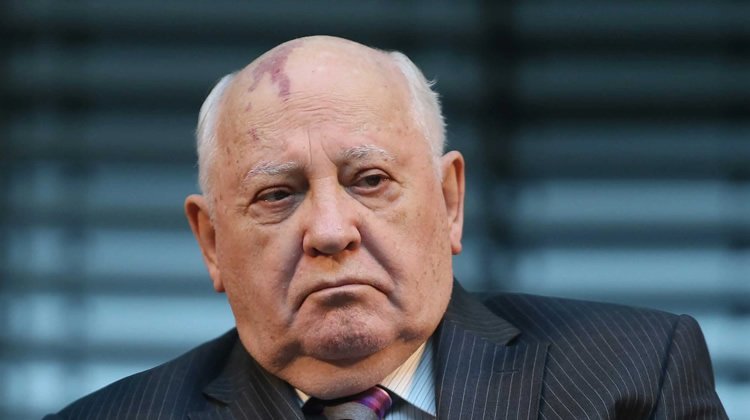
A significant chapter of global history was closed on 30th August 2022. On that day, an equally substantive champion of reforms passed and bequeathed us a mixed assessment of his contribution to the new world order. Mikhail Gorbachev is that man. He was not alone in this powerful club. His best-known contemporaries were Ronald Regan of the USA and Margaret Thatcher of the UK. They were not ideological soulmates but shared a heart for radical reforms.
Gorbachev represents different personalities depending on which side of the cliff you stand. Widely seen in Russia as the man responsible for the collapse of the Soviet Union, Mikhail Gorbachev is hailed in the West as the leader who helped end the Cold War in Europe and nudged Russia towards political liberalisation. Many on the left in the “global South” blame him for facilitating US triumph in the Cold War and creating a global imbalance in favour of the West.
His record is much more complicated than the extreme perceptions of his brief tenure as the last General Secretary of the Communist Party of the Soviet Union during 1985-91. Whichever way one assesses the leader, who died Tuesday at 91, there is no denying his role as a world-historical figure who altered post-War international politics.
He did not set out to dismantle the Soviet Union. That was an unintended outcome of his effort to reform the Russian economy (perestroika), inject a measure of openness into its closed society (glasnost), end the arms race with the US, build cooperative relations with Europe, and pull back from military adventurism in Afghanistan and the developing world.
The perestroika (“restructuring” or “reformation”), which he started then, never reached the destination he wanted – democratic, humane socialism;perhaps because that destination was utopia rather than a real place. The glasnost (openness) policy revolutionised Soviet Union society by allowing for a vibrant civil society and relatively free press. Glasnost galvanised opposition to Soviet rule and gave the people the ‘fuel’ to burn down the communist ideology of the time. But there is no doubt that Gorbachev welcomed Western ideas and assistance—seemingly recognising that an open economy and a vibrant civil society were the keys to his country’s future, not just something to please the West.
As a young member of the CPSU Politburo, taking charge of a society mired in multiple crises, Gorbachev believed that rejuvenating the Soviet Union was his patriotic task. But he could not control the forces he unleashed. This, in turn, led to the collapse of the communist system that the 1917 Russian Revolution founded. During the seven decades that it lasted, the Soviet Union had a powerful impact on world affairs — playing a critical role in defeating fascism in Europe, constructing the post-War order in Europe, and inspiring communist movements worldwide.
Three decades after the collapse of the Soviet Union, many of Gorbachev’s presumed triumphs have turned out to be ephemeral. After a brief flowering of liberalism, hopes for democracy in Russia have withered away. The peace Gorbachev constructed in Europe went up in flames as Russia invaded Ukraine in February. If Gorbachev hoped for constructive relations with the West, President Vladimir Putin is now locked in a severe confrontation with Europe and the US.
In Nigeria, the leftist establishment deeply mourned the collapse of the Soviet Union and the disappearance of a familiar political, economic, and ideological world. In retrospect, though, the collapse of the Soviet Union compelled Nigeria to reform its economy, reorient its foreign policy and push hard to elevate its global standing in early 1990. This drove a further push away from Babangida’s Structural Adjustment Programme (SAP) reform which was a bold move to transform the Nigerian state, economically and socially.
Reflecting on the life and times of Mikhail Gorbachev leads us to foundational and fundamental issues about Nigeria’s economic, political, and social evolution but, most notably, a future marked by uncertainty and rapid changes. The parallelism between Nigeria of today and the Soviet Union of Gorbachev is apparent. The decay of the Nigerian systems is internal, and the cancerous nature needs painful surgery to remove the affected organs of the system to have any chance of growth in Nigeria.
Corruption, insecurity, criminality,poverty, youth unemployment and hopelessness are ravaging the country, and if nothing is done now, it may push Nigeria over the precipice. However, like the Soviet Union, we must take care not to kill the Nigerian state by unleashing reforms whose consequences may not be clear and may lead to the unravelling of the Nigerian state like that of the Soviet Union. Therefore, Nigeria has a lot to learn from Gorbachev and the reform and collapse of the Soviet Union.
Nigeria has come to a point where it requires immediate holistic reforms and transformation to lead the country in a direction that will positively impact its development. The existing systems are not working, and it is apparent to all. Only a madman will keep doing the same thing and expect a different outcome. Nigeria needs to overhaul the political system, which is barely democratic.
The forthcoming 2023 general election is such a democratic ritual that Nigeria performs. These elections produce leaders who lack the leadership skills, competence, vision, and dexterity to take Nigeria to Uhuru. Most politicians make bold promises to the electorate without plans to accomplish such promises. The electorate often has little or no choice in selecting good leaders since the political structures present to the electorates incompetent people as candidates for elections. The electorate is to be blamed too. Many are apolitical, apathetic, or greedy, so politicians quickly buy their votes at ridiculous prices.
However, Nigeria has neglected chiefly the democratic principles, ethos and institutions that make democracy function well. Nigeria has not imbibed democratic principles such as the rule of law, credible democratic institutions, independence of the judiciary, freedom of life, property, and conscience. We need leaders who not only are products of good democratic processes but are also adherents and advocates of democratic principles and ethos.
Therefore, there is a need to look at the party systems and practices that produce candidates, improve the credibility of elections, and overhaul the Nigerian structure based on the people’s yearnings and aspirations as part of the Nigerian entity. And appraise the move from centralisation to more decentralisation of power (getting real power closer to the people), structure the different organs of government to be fit for purpose, and create a political consensus that is pro-development, pro-humanism, and pro-quality living standards for all Nigerians.
This reform must be gradual and pushed from the centre with the buy-in of people from all parts of Nigeria. The universalism of collective national interest must subsume ethnicism, regionalism and religious jingoism for the benefit of all. The leader allays the fears, suspicion, and hatred of people from various parts of the country. And the leaders must share their visions with the people and show them how they work hard to actualise their ideas.
The leaders must restructure the Nigerian economy to be more productive. There is no basis for growth if all we do is consume and not produce, mainly when 70% of what we consume comes from abroad. Even the little we produce is pure rent-seeking because we focus on selling them as raw materials at lower prices and buying finished goods at exorbitant prices. We cannot even fully exploit natural resources, even if we cannot transform them into finished goods – we have plenty of arable lands, yet we cannot produce enough food for our consumption. We exploit natural oil and gas, yet we cannot meet our OPEC monthly quota. Our economy is dependent heavily on government expenditure.
When government revenue is weak, the whole economy of the country suffers. This has led to excessive government borrowing and has plunged Nigeria into a debt crisis, where 120% of our revenue is needed monthly to service the loans. Nigeria needs a leader who, through good implementable policies, will transform Nigeria’s economy. Nigeria should learn from countries like Singapore, UAE, and South Korea, which changed their economy over the past few decades to become a developed economy. The leader must have the courage to make difficult decisions to run a modern capitalist economy driven by market principles but adapted to serve Nigeria’s peculiar interests.
There needs to be social reform. The leader should build this social reform on the positive collective socio-cultural mores and pro-development ethos.. In a multi-religious society, freedom of worship, respect, and tolerance of the religious views of others are sacrosanct. The leaders and the citizens must eschew all forms of religious or ethnic bigotry and embrace the brotherhood of citizens of one nation and one people.
Our social creed will be the eternal principle of “E Pluribus unum” (Out of many, one). We must create a cohesive social movement geared towards the development of Nigeria. This social movement will create the enabling environment for getting everyone involved – an action reminiscent of the independence movement, where some Nigerians happily laid down their lives to actualise freedom from colonial rule.
Gorbachev has played his part in history. He will be remembered as a leader with great intention to reform his country and influence world order but couldn’t control the outcomes of such reforms that led to the collapse of his country. He made a lot of hard choices to push his country in a new direction because he saw the internal decays and contradictions that may have inevitably led to its collapse.
Nigeria needs a leader in the ilk of Gorbachev with the sincerity of purpose and courage to upturn the system and make the hard choices Nigeria desperately needs. However, this leader must be careful to manage the reforms to avoid the disaster of the collapse of Nigeria, just like the Soviet Union.