
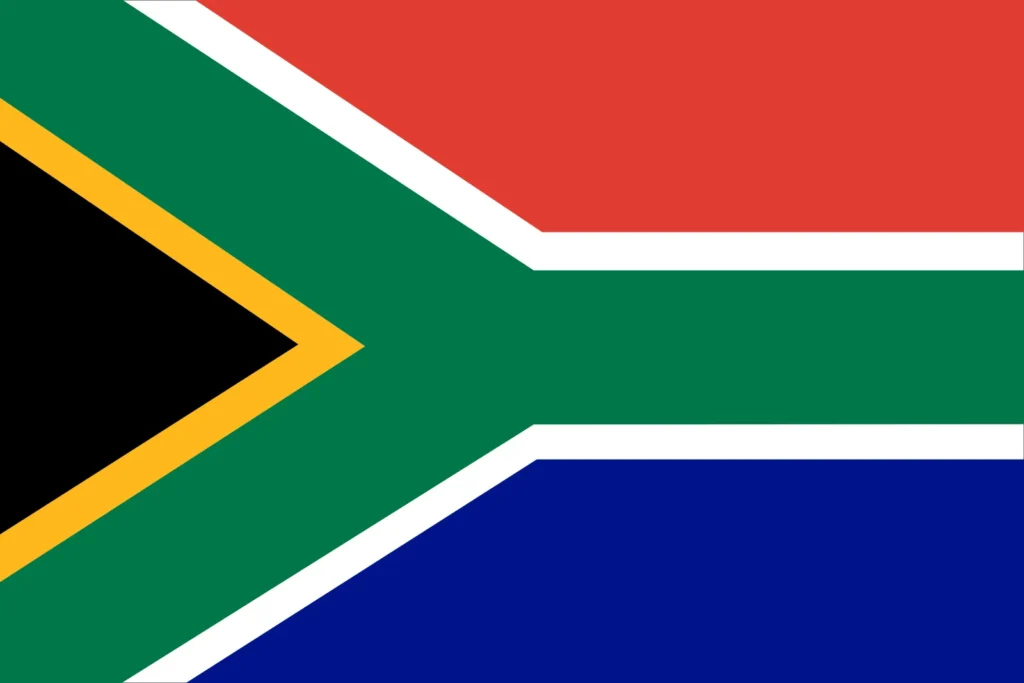
The recurring headline, “Another Nigerian Killed in South Africa”, has become a staple of both local and international news bulletins.
Most of these deaths result from xenophobic attacks, allegations of crime/drug dealing, and excessive use of force by the law enforcement agencies.
There are also reports of Nigerians killing Nigerians owing to criminal, cult and gang rivalries as well as business and personal disputes.
Available data from the Nigerian Union South Africa (NUSA) and the Nigerian Citizens Association South Africa (NICASA) indicates that between 2000 and 2020, more than 127 Nigerians were killed in South Africa.
Latest reports indicate that these killings continued in the subsequent years.
On Nov. 9, 2025, Mr Chikamnene Eddie Mmuonagorom, an indigene of Anambra, was stabbed to death in his home in Floville, Kimberley; On Feb. 8, Emeka Uzor, an indigene of Enugu State, was shot dead while in his vehicle at a Caltex filling station in Windsor East, Randburg, Johannesburg.
Most recently, on Feb. 11, Isaac Satlat, an indigene of Plateau, who was an e-hailing driver, was strangled to death in Pretoria by passengers (a man and a woman) who requested a ride via the Bolt app.
In the aftermath of each incident, statements and condemnations are issued and diplomatic engagements are initiated—oftentimes inconclusively. Then, another incident occurs.
The Nigerians in Diaspora Commission (NIDCOM) has consistently flayed the reoccurring menace.
NIDCOM Chief Executive Officer, Abike Dabiri-Erewa, in a statement by the commission’s Director of Media, Public Relations and Protocols, Abdur-Rahman Balogun, described the incidents as disturbing and urged South African authorities to ensure justice was served.
She also called for improved protection of Nigerians and other non-indigenes residing in the country.
Dabiri-Erewa said that that Nigeria and South Africa shared longstanding ties and expressed concern over recurring violent crimes against Nigerians.
In a similar vein, NUSA described the killings as “senseless acts of violence” and urged the South African Police Service to ensure that those responsible were promptly and fully prosecuted.
On his part, NICASA President, Mr Frank Onyekwelu, said the association condemned the killings in the strongest terms, adding that no individual or group had the right to take the law into their hands or deprive another person of life.
“We demand a full, transparent, and impartial investigation, and we will pursue all diplomatic and legal avenues to ensure that justice is served.
“NICASA calls on the South African Police Service (SAPS) and other relevant authorities to urgently investigate the matter and ensure accountability in line with the rule of law,” he said.
He urged members of the Nigerian community in South Africa to remain calm, peaceful and law-abiding as engagements continued with the Nigerian Consulate, South African authorities and human rights institutions.
While South African authorities often make arrests, the issues of diligent prosecution and conviction are not always clearly addressed.
It is worth noting that three of the accused—Dikeledi Mphela (25), Gotseone Machidi (26), and McClaren Mushwana (30)—are appearing before the Pretoria Magistrate’s Court in connection with the murder of Isaac Satlat.
In retrospect, Nigeria-South Africa relations date back to 1960, with Nigeria positioned in the vanguard of the anti-apartheid and liberation struggles.
In 1960 to 1990s, after the 1960 Sharpeville Massacre, Nigeria championed the anti-apartheid cause, funding liberation movements like the ANC and providing passports to South African activists, according to The Africa Report and Wikipedia.
In 1976, Nigeria established the Southern Africa Relief Fund (SARF) to support the anti-apartheid struggle.
More importantly, the “Mandela Tax”, a compulsory deduction from Nigerian civil servants’ salaries and voluntary donations by citizens in the 1970s, was introduced to support the anti-apartheid struggle in South Africa.
In 1994, formal, diplomatic, and economic ties were established after the end of apartheid and the start of democracy in South Africa in 1994, culminating in a Bi-national Commission (BNC) inaugurated in 1999 to manage relations.
Recall that xenophobic attacks on Nigerians and other African migrants occurred in 2008, 2015, and 2019, leading to injuries and fatalities among Nigerians in South Africa.
While xenophobic attacks seem to be abating, the killings of Nigerians under various guises are cyclical.
The disturbing trend has drawn the attention of perceptive pan-Africanists.
The President, Africa Development Study Centre (ADSC), Victor Oluwafemi, said it had become expedient for the Federal Government to summon South Africa’s High Commissioner to Nigeria over recurrent attacks on Nigerians in the country.
Oluwafemi recommended a formal engagement for clear assurances regarding the safety of Nigerian nationals in South Africa.
According to him, the safety of Nigerian citizens abroad was not a diplomatic courtesy but a sovereign obligation.
Oluwafemi said that incidents involving the killing or violent targeting of Nigerians abroad must trigger visible diplomatic action within 24 hours.
According to him, delayed responses weaken deterrence and embolden repetition.
“Protection of citizens must therefore be intentionally built into foreign policy architecture.
“Bilateral engagements must include enforceable commitments on citizen safety, while diplomatic performance must be measurable, accountable, and time bound,” he said.
Julius Malema, South African opposition leader and founder and leader of the Economic Freedom Fighters (EFF), denounced the killings and xenophobic attacks, applauding Nigeria’s contributions to South Africa’s freedom.
He described xenophobia as “a betrayal of African unity”.
Malema spoke recently at the opening of the 2025 Annual General Conference of the Nigerian Bar Association (NBA) held at International Conference Centre, Enugu.
He said Nigeria was one of the countries that stood firmly by South Africa, during that country’s darkest hour.
“I must reiterate once again that it is a deep honour to stand before you today in Enugu, Nigeria, a country that holds a special place in the hearts of all South Africans.
“We understand history, feel solidarity and appreciate the sacrifice made by others in the course of our history; Nigeria is not just another African country to us.’’
He recalled that when South Africa was fettered by apartheid and its people were murdered, imprisoned, and denied basic humanity, Nigeria rose as a giant for justice, placing the country squarely at the centre of its corridors.
He said that Nigeria set up the Southern African Relief Fund and mobilised its citizens to contribute to the liberation struggle.
“Even as it faced its own challenges at home, these initiatives raised millions of dollars to support the liberation of South Africa as people paid directly from their salaries to contribute to the liberation struggle.
“Nigerian students sacrificed a portion of their income, through the Mandela Tax, which supported an educational training programme for Black South Africans.
“A successive Nigerian Government never stopped in their material and moral support for South Africa’s liberation.
“In fact, Nigerian Government boycotted the 1976 Olympic Games and the 1979 Convention of the Multiculturalists.”
He added that Nigerian students did not only contribute through Mandela Tax, but also, through protests in opposition to apartheid.
“We can neither forget all those who stood by us during difficult times, nor can we forget that when Nelson Mandela was released from prison in 1990, one of his earliest international visits was Lagos and Abuja to personally thank the Nigerian people.
“These gestures are the foundation of a bond sealed in blood and sacrifice; however, this history must not remain in the past.
“This bond between South Africa and Nigeria must be carried forward into the present, not just in political sentiment but in concrete economic collaboration as both our nations stand as giants of the continent,” he said.
Ultimately, while Nigerians living in South Africa are obligated to engage in legitimate business and shun criminality, pan Africanists say the authorities must fulfill their responsibility to protect foreign nationals.
“Turning fellow Africans into prey whose lives can be snuffed out at the slightest touch is despicable and against the African spirit.
“These xenophobes must be contained and reoriented; the orgy of violence must stop now,” they said. (NANFeatures)


