
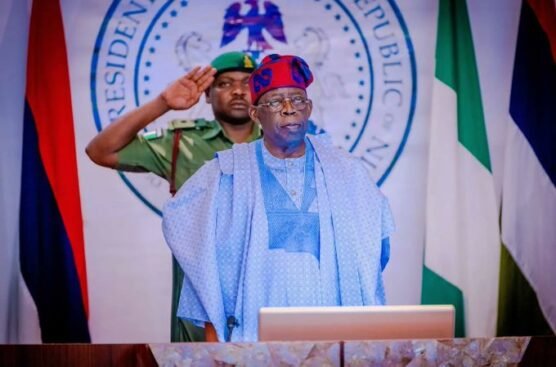
On Thursday, President Bola Tinubu presented the 2026 Appropriation Bill to a joint session of the National Assembly, proposing a total budget of ₦58.46 trillion, including non-debt recurrent expenditure of ₦15.25 trillion.
In his address, the President fixed capital expenditure at N26.08 trillion and set the crude oil price benchmark for the fiscal year at US$64.85 per barrel.
Here is a full text of the President’s speech and a breakdown of the 2026 budget as released.
PROTOCOLS
Distinguished Senate President,
Rt. Honourable Speaker and Honourable Members of the House of Representatives,
Distinguished Senators and Honourable Members of the National Assembly,
Fellow Nigerians,
1. I appear before this Joint Session of the National Assembly, in fulfilment of my constitutional duty, to present the 2026 Appropriation Bill of the Federal Republic of Nigeria.
2. This is a defining moment in our national journey of reform and transformation. Over the last two and a half years, we made a deliberate choice: to confront long‑standing structural weaknesses, stabilize our economy, rebuild confidence, and lay a durable foundation for a more resilient, inclusive, and dynamic Nigeria.
3. These reforms were necessary — and they have not been painless. Families and businesses have faced pressure; established systems have been disrupted; and budget execution has been tested. I acknowledge these difficulties plainly, and I assure Nigerians that their sacrifices are not in vain. The path of reform is seldom smooth, but it is the surest route to lasting stability and shared prosperity.
4. Today, we come with a Budget that consolidates our gains, strengthens our resilience, and turns recovery into improved living standards for every Nigerian household.
THEME OF THE 2026 BUDGET
5. The 2026 Budget is themed: “Budget of Consolidation, Renewed Resilience and Shared Prosperity”. It reflects our determination to lock in macroeconomic stability, deepen competitiveness, and ensure that growth translates into decent jobs, rising incomes, and a better quality of life across our Federation.
ECONOMIC REALITIES: SIGNS OF STABILISATION, PURPOSE OF THE NEXT STEP
Stronger discipline in budget execution. I have issued directives to the Honourable Minister of Finance and Coordinating Minister of the Economy, the Honourable Minister of Budget and Economic Planning, the Accountant‑General of the Federation, and the Director‑General of the Budget Office of the Federation to ensure that the 2026 Budget is implemented strictly in line with the appropriated details and timelines.
13. We expect improved revenue performance through the new National Tax Acts and the ongoing reforms in the oil and gas sector—reforms designed not merely to raise revenue, but to drive transparency, efficiency, fairness, and long‑term value in our fiscal architecture.
14. I will also be unequivocal about Government‑Owned Enterprises. Heads of all GOEs are hereby directed to meet their assigned revenue targets. To support this, we will deploy end‑to‑end digitisation of revenue mobilisation—standardised e‑collections, interoperable payment rails, automated reconciliation, data‑driven risk profiling, and real‑time performance dashboards—so leakages are sealed, compliance is verifiable, and remittances are prompt. These targets will form core components of performance evaluations and institutional scorecards. Nigeria can no longer afford leakages, inefficiencies, or underperformance in strategic agencies. Every institution must play its part.
PHILOSOPHY AND OBJECTIVES OF THE 2026 BUDGET
15. Mr. Chairman and fellow Nigerians, the 2026 Budget is guided by four clear objectives:
One, consolidate macroeconomic stability; Two, improve the business and investment environment; Three, promote job‑rich growth and reduce poverty; and Four, strengthen human capital while protecting the vulnerable.
16. In short: we will spend with purpose, manage debt with discipline, and pursue growth that is broad‑based — not narrow — and sustainable — not temporary.
2026 BUDGET OVERVIEW: THE FISCAL FRAMEWORK
17. Distinguished Members, the 2026 Federal Budget is anchored on realism, prudence, and growth orientation.
18. The key aggregates are as follows: Expected total revenue: N34.33 trillion.
Projected total expenditure: N58.18 trillion, including N15.52 trillion for debt servicing.
Recurrent (non‑debt) expenditure: N15.25 trillion. Capital expenditure: N26.08 trillion. Budget deficit: N23.85 trillion, representing 4.28% of GDP.
19. These numbers are not just accounting lines. They are a statement of national priorities. We remain firmly committed to fiscal sustainability, debt transparency, and value‑for‑money spending.
20. The 2026–2028 Medium‑Term Expenditure Framework and Fiscal Strategy Paper sets the parameters for this Budget. Our projections are based on: a conservative crude oil benchmark of US$64.85 per barrel; crude oil production of 1.84 million barrels per day; and an exchange rate of ₦1,400 to the US Dollar for the 2026 fiscal year.
21. We will continue to reduce waste, strengthen controls, and ensure that every naira borrowed or spent delivers measurable public value — especially in infrastructure, human capital, and security.
PRIORITIES AND ALLOCATIONS: SECURITY, PEOPLE, PRODUCTIVITY
22. Our allocations reflect the Renewed Hope Agenda and the practical needs of Nigerians. Key sectoral provisions include:
Defence and Security: N5.41 trillion
Infrastructure: N3.56 trillion
Education: N3.52 trillion
Health: N2.48 trillion
23. These priorities are interlinked. Without security, investment will not thrive. Without educated and healthy citizens, productivity will not rise. Without infrastructure, jobs and enterprise will not scale. This is why the Budget is designed as one coherent programme of national renewal.
24. Security remains the foundation of development. The 2026 Budget strengthens support for: modernisation of the Armed Forces; intelligence‑driven policing and joint operations; border security and technology‑enabled surveillance; and community‑based peacebuilding and conflict prevention.
25. We will invest in security with clear accountability for outcomes—because security spending must deliver security results. To secure our country, our priority will remain on increasing the fighting capability of our armed forces and other security agencies by boosting personnel and procuring cutting-edge platforms and other hardware. We are also pursuing a new era of criminal justice system to stamp out terrorism, banditry, kidnapping for ransom and other violent crimes. Our administration is resetting the national security architecture and establishing a new national counterterrorism doctrine—a holistic redesign anchored on unified command, intelligence, community stability, and counter-insurgency. This new doctrine will fundamentally change how we confront terrorism and other violent crimes that have become existential threats to our corporate survival and have heightened anxiety among our people.
Henceforth, and under this new architecture, any armed group or gun-wielding non-state actors operating outside state authority will be regarded as terrorists. These include bandits, militias, armed gangs, criminal networks with weapons, armed robbers, violent cult groups, forest-based armed collectives, and foreign-linked mercenaries. Groups or individuals conducting violence for political, ethnic, financial, or sectarian objectives are also classified as terrorists. Members of any group extorting communities, kidnapping civilians, occupying or seeking to occupy territory within Nigeria will be classified as terrorists. The denominator is that if you wield lethal weapons and act outside the state’s authority, you are a terrorist. Any individual or entity that enables the listed groups as financiers, money handlers, harbourers, informants, ransom facilitators, and negotiators will also be classified as terrorists. Political protectors and intermediaries, transporters, arms suppliers, and safe-house owners will be declared as terrorists. Politicians, traditional rulers, community leaders, and religious leaders who facilitate and encourage violent actions and terror within Nigeria and against our citizens are also terrorists.
26. No nation can grow beyond the quality of its people. The 2026 Budget strengthens investments in education, skills, healthcare, and social protection.
39. It is with great pleasure, therefore, that I lay before this distinguished Joint Session of the National Assembly the 2026 Appropriation Bill of the Federal Republic of Nigeria, titled: “Budget of Consolidation, Renewed Resilience and Shared Prosperity”.
May God bless the Federal Republic of Nigeria.


