
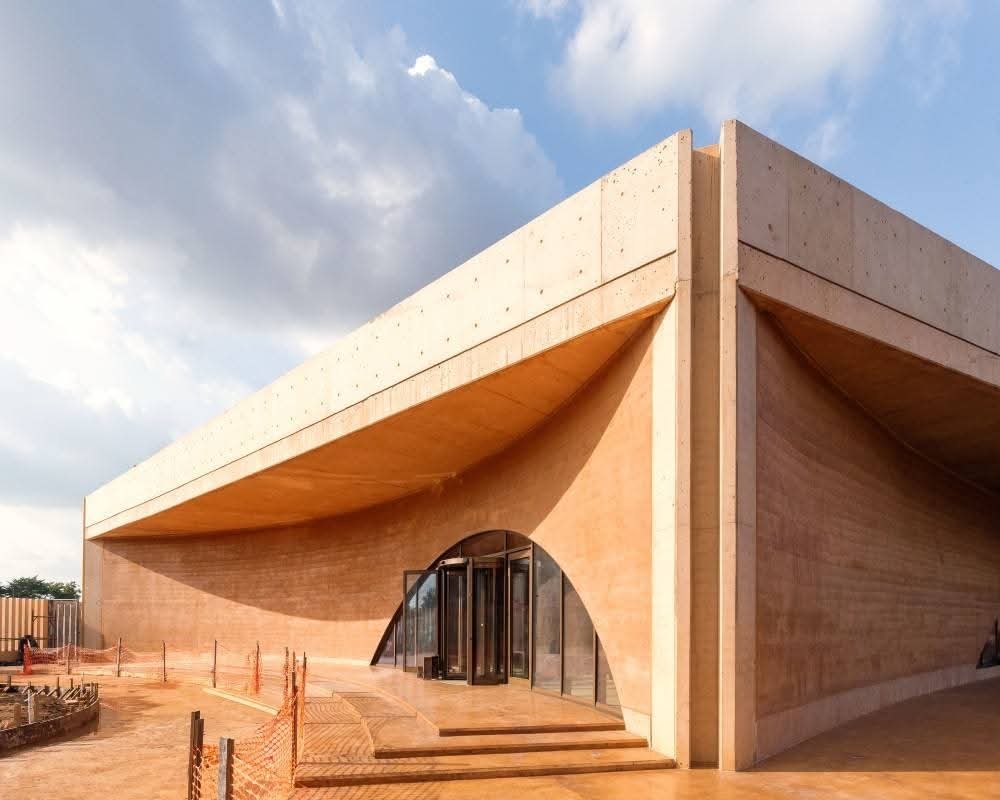
In recent days, a loud narrative has been pushed—claiming that MOWAA is the single largest private multisectoral investment in Benin City and by extension Edo State since 1999, and that a “serious” government should simply embrace it and “draw benefits” from its presence.
But this argument hides one basic truth:
An investment built on a faulty foundation—no matter how massive or beautiful—cannot be treated as untouchable.
No responsible government inherits illegality and calls it development.
No administration committed to transparency turns a blind eye to unanswered questions simply because a building looks iconic.
Accountability Is Not Hostility—It Is Governance
The Edo State Government has not “hounded” MOWAA; it has merely done what a responsible government must do when a project of this scale sits on public land, carries public implications, and raises public questions.
A government that refuses to ask questions is a government that has abandoned its people.
Those insisting that MOWAA must be accepted without scrutiny ignore a fundamental principle:
Private investments do not operate in a vacuum—they operate within the laws, institutions, and environmental standards of the state.
The Foundation Matters More Than the Finish
Let us be clear:
The size of a project does not make it legitimate.
The beauty of a structure does not make its foundation lawful.
The grandeur of an edifice does not erase the need for due process.
If the groundwork of MOWAA is surrounded by opacity, questionable approvals, irregular documentation, or potential violations of environmental and land-use laws, then the government has a duty—not a choice—to pause and demand clarity.
Because when foundations are faulty:
• Public trust is shaken.
• Community rights are endangered.
• Environmental compliance becomes uncertain.
• Long-term risks are transferred to future governments and taxpayers.
No investment, public or private, can enjoy immunity from these concerns.
Edo State Belongs to the People, Not to Projects
Critics say the government should “draw benefits” from MOWAA.
But how can a government draw benefits from what it does not fully understand?
How can leaders protect the people when the full facts are not on the table?
How does accountability become “ignorance”?
• If an investment truly serves the people, then:
• It should welcome transparency.
• It should proudly present its Environmental Impact Assessment (EIA).
• It should provide clarity on land acquisition and approvals.
• It should show full compliance with state and federal laws.
• It should withstand the sunlight of public scrutiny.
Icons do not fear questions.
Only shadows do.
Government is Continuity—So is Responsibility
Yes, government is a continuum—but continuity does not mean inheriting wrongdoing or irregularity.
Every new administration must examine what it meets on ground:
• Was the right process followed?
• Were the right documents obtained?
• Were communities properly consulted?
• Was the environment protected?
• Was the public interest safeguarded?
When the answers are unclear, a review is not optional—it is compulsory.
Edo State cannot continue the culture where a previous administration makes questionable decisions and the next administration, out of fear or political correctness, pretends not to see it.
A government that continues illegality becomes part of the illegality.
MOWAA Should Stand—But It Must Stand Properly
This advocacy is not against development.
It is not against private investors.
It is not against modernization.
It is for order, transparency, and accountability.
If MOWAA is truly the pride of Edo State, then it should have no difficulty undergoing a legitimate review.
No serious investor fears the law.
No genuine partner fears documentation.
The only investment that fears due process is the one whose foundation is faulty.
Final Word: Edo Must Get It Right
The Edo State Government owes its loyalty to the people—not to projects, not to elites, not to narratives designed to intimidate the state into silence.
Scrutiny is not sabotage.
Transparency is not hostility.
Accountability is not witch-hunting.
If MOWAA is clean, let it prove it.
If everything is in order, let the documents speak.
If the foundation is sound, the structure will stand.
But if the foundation is faulty, then the government must correct it—because no investment, no matter how iconic, is above the law or greater than the people of Edo State.
ABOUT THE AUTHOR:
MrFigoSpeaks
+2348063085664


